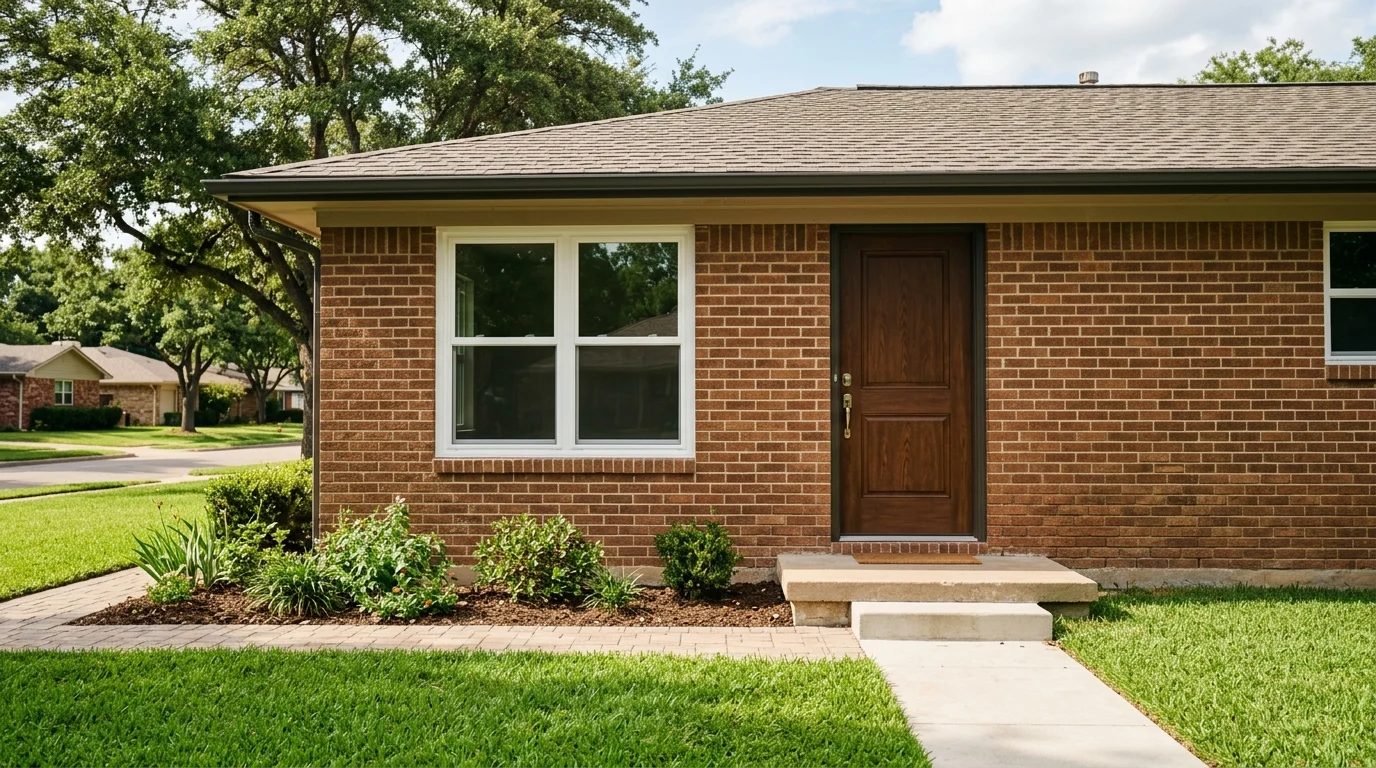
Brick home with new white double-hung windows and a navy front door

End Drafty Windows Before Summer Heat Arrives

Residential window replacement in Haltom City means removing old, warped frames and fitting new vinyl windows measured and sealed to your home's exact openings. Richland Hills Window Replacement & Doors handles the measuring, removal, and installation so a house stops leaking conditioned air out the sides of a worn sash. The work covers everything from one foggy, failed pane to a full set of aging frames, and each opening gets measured on site before anything is ordered. If your windows stick, rattle, or let in a draft no matter how tight you latch them, getting them replaced now beats patching through another extreme season.

Why Customers Choose Us

“At Richland Hills Window Replacement & Doors, we take pride in the satisfaction and positive feedback from our customers. These reviews from residents across the Richland Hills TX area and neighboring cities reflect our commitment to quality, professionalism, and exceptional customer service. Read on to see what our clients have to say about their experiences with us.”

Richland Hills Window Replacement & Doors logo
replacement windows

What Every Window Replacement Job Includes in Haltom City

Every residential window replacement starts with the same core promise: frames, glass, and screens that fit your opening and hold up to North Texas weather. What changes from house to house is the style and glass package you pick. Here's what goes into the work itself.

Vinyl Frames Built for the Climate Here

Vinyl windows handle the swing between summer heat and winter cold without the warping or rot that catches up to older wood window frames. The frame material you choose affects how tight the seal stays over the years, which is why vinyl is the standard pick for most homes going through a window replacement in this area.

Glass Packages That Cut Down on Heat Gain

Low-E glass reflects radiant heat before it builds up indoors, and pairing it with a double-pane window assembly adds an insulating gap that plain single glass never had. Homeowners who want an extra layer against Texas summers can step up to a triple-pane window, which adds a second gap of insulating gas for a quieter, steadier interior. Either option counts as an energy-efficient window upgrade over what's likely in the walls now.

Operable Styles That Fit How the Room Is Used

Sliding windows move side to side on a track, which makes them a practical pick for rooms where you want airflow without a crank handle sticking out over a patio or walkway. They pair well with the vinyl frame and glass package above, so the whole unit looks and performs as one piece instead of mismatched parts.

Screens That Keep Bugs Out Without Blocking Airflow

Window screens get fitted to the finished opening after the sash and frame are set, not before, so they sit flush instead of gapping at the corners. A screen that doesn't fit right is often the first sign of a rushed job, so it's worth checking that each one seats cleanly once the crew is done.

Put together, the frame, the glass, and the screen are what you're really paying for in a window job, whatever the specific style ends up being. Asking a contractor to walk through each of these pieces before work starts is a reasonable way to see whether the quality matches what actually gets installed.

Is It Time to Replace Your Windows, or Can They Wait?

The answer depends on what you're seeing right now. A cracked sash, a door that won't latch, or a pane that fogged up overnight is an urgent problem that won't fix itself and usually gets worse through a Haltom City summer or winter. A home with aging frames that still open and close but feel drafty around the edges is a different situation: a planned upgrade you can schedule on your own timeline rather than a repair you're forced into.

Both paths lead to the same question: whether to patch what's there or move ahead with window replacement. The usual signs of window failure are worth naming plainly: glass that stays foggy between the panes even after cleaning, frames that feel soft or show rot at the corners, sashes that stick or won't stay up, and a draft you can feel standing a few feet away on a windy day. None of those get better with another coat of caulk. If you're seeing two or more of them on the same window, it's telling you the seal or the frame has failed, not just the finish.

Timing It Around Texas Weather

The best time to replace windows in this area is before the extreme stretch of heat or cold actually arrives, not during it. Scheduling early gives you room to compare options without rushing the decision under a 100-degree afternoon or a sudden cold snap. It also means the house isn't losing conditioned air through bad seals while you wait.

What Shapes the Decision

Window replacement cost factors and the window replacement timeline both come down to the same variables: how many openings need work, what kind of frame and glass you're installing, and how easy the crew's access to each window is. Richland Hills Window Replacement & Doors walks through those specifics with you before any work starts, so the scope matches what your home actually needs.

What Happens From First Measurement to Final Seal

A residential window replacement follows the same basic sequence whether it's one cracked pane or every opening in the house: measure, remove, fit, seal, finish. The order rarely changes - what changes is how much time each step takes and what the crew finds once the old frame comes out.

Measuring the Rough Opening and Picking a Style

The installer measures the rough opening's width, height, and depth, then checks those numbers against the unit you've picked. A standard double-hung windows order fits a rectangular opening with minimal framing work, while bay windows or anything with a projecting shape need extra support planned before the old unit ever comes out. Getting this step wrong is the single most common reason a job runs into trouble later.

Taking Out the Old Frame

Removal starts with stripping the exterior trim, cutting through old caulk and fasteners, and lifting the sash and frame out as a unit when the wood allows it. This exposes the wall cavity underneath, which is the point where an installer can actually see whether the sheathing and studs around the opening are sound or soft from years of moisture getting in.

Setting and Sealing the New Window

Fitting the new frame means squaring it in the opening, shimming it level on all sides, and fastening it before anything gets sealed.

Shimming and Fastening

Shims hold the frame plumb while screws go in through the jamb, not just the nailing fin, so the unit doesn't shift once the house settles around it.

Sealing the Gap

Low-expansion foam or backer rod fills the gap between frame and rough opening, and exterior caulk closes the joint against the siding. Skipping this step is how replacement windows end up with the same drafts the old ones had.

Finishing the Interior and Confirming the Fit

A finished job means the interior trim goes back on, caulk lines run clean, and the sash opens and closes without binding or scraping. That check applies the same way to a single home window replacement as it does to a full-house job, and it's worth watching while the crew is still on-site rather than after they've packed up. Whether the work is framed as residential window installation on one room or a complete replacement across the house, the same final walk-through tells you whether the fit is right.

How Haltom City's Housing and Weather Shape the Job

Where you live changes how a residential window replacement gets planned and installed. Home age, frame material, and sun exposure all affect what the crew finds once the old sash comes out, and that shapes the recommendations you get before anything is removed.

Older Frames Need a Closer Look Before Install Day

A lot of homes around Haltom City still carry original aluminum or single-pane windows, and those frames don't always match today's standard rough openings. A window replacement crew checks the opening for square, rot, or settling before ordering anything, because a frame that's shifted even slightly changes how the new unit gets set and sealed.

North Texas Sun and Storms Put Extra Load on Glass and Seals

Long stretches of direct summer sun and sudden spring storms both stress glass seals and weatherstripping faster than milder climates do. That's part of why low-E glass and solid frame sealing matter more here than in a region with gentler weather swings, and why a door or window that's already drafty tends to get worse quickly once summer heat sets in.

Haltom City Sits Among Several Towns with Similar Housing Patterns

Haltom City shares a lot of building-era overlap with North Richland Hills, Hurst, Watauga, and Fort Worth, so a crew working across these areas sees the same frame styles, the same rot patterns near older entry doors, and the same condensation complaints on aging double-pane glass. That repetition is useful: it means the fixes applied on a Haltom City job aren't guesswork, they're patterns the crew has already worked through on nearby streets.

What This Means for Your Decision

If your home sits in one of these older pockets, plan on the estimate visit including a real look at the frame and opening, not just the glass. Richland Hills Window Replacement & Doors treats that inspection step as part of any residential window replacement, since the condition behind the trim often matters as much as the window itself.

What Goes Into Fitting and Sealing Every Window

The technical side of a window replacement comes down to how well the opening is measured, framed, sealed, and insulated, not just which glass package you pick. Get any one of those wrong and a brand-new window can still leak air or water within a year.

Getting the Rough Opening Right

The rough opening is the framed gap in the wall that the new window has to fit into, and it drives everything that follows. An installer checks it for square, level, and plumb before setting anything, because a frame installed into an out-of-square opening will bind, rack, or gap no matter how good the window itself is. On older Haltom City homes, this step also uncovers soft wood or settled framing that needs attention before a new unit goes in.

Flashing and Caulking That Actually Keep Water Out

Window flashing is the material layered around the opening to direct water away from the wall before caulk ever gets involved. It goes in first, lapped so water sheds outward and down, never behind the siding. Window caulking comes after the unit is set and seals the gap between frame and exterior trim; it's a finishing seal, not a substitute for proper flashing underneath it.

Why Weep Holes Matter More Than People Think

Weep holes are the small drainage openings built into the bottom of a window frame, and they exist to let any water that gets past the glass or seals drain back outside instead of pooling in the frame. Blocked or painted-over weep holes are a common reason an otherwise sound window starts showing frame rot.

Reading a U-Factor Rating

A u-factor rating measures how much heat a window lets pass through the glass and frame; a lower number means better resistance to summer heat and winter cold. It's one of the few numbers worth comparing side by side when you're weighing window options for a Haltom City home.

Insulation Around the Frame

Insulation around windows fills the gap between the rough opening and the window frame itself, usually with a low-expansion foam that won't bow the frame out of square. Skipping this step, or packing it too tight, is a quiet cause of drafts that show up months after installation.

What to Ask Before You Hire a Window Crew

Choosing who handles your window replacement in Haltom City comes down to three things: what's in writing, who actually shows up, and how payment works. Asking these questions before signing anything heads off most of the problems homeowners run into later.

Does the Written Estimate Spell Out Materials and Scope?

A solid written estimate lists the exact window type for each opening - double hung, casement, sliding, bay, or egress - plus frame material, glass package, and installation method. Get the specifics in writing: the vinyl windows brand being used, whether the glass is low-E, and if the quote covers trim work, flashing, and haul-away of the old units. If a quote is just one lump number with no breakdown, ask for a line-item version before agreeing to anything. Compare bids item by item rather than by the bottom line, since two quotes on the same Haltom City home can differ a lot depending on what each one actually includes.

What Should the Payment Schedule and Financing Terms Look Like?

Payment terms deserve as much scrutiny as the price itself. Ask how payments are structured - a deposit at signing, a payment when materials arrive, and a final payment once the finished work passes your inspection is a common pattern in this trade. If financing comes up, get the rate, term length, and any fees spelled out in writing, and ask what happens to the payment plan if the scope of the job changes partway through. A company unwilling to put payment terms on paper is one to be cautious of.

Is the Crew on Your Property Employed by the Company or Subcontracted?

Ask directly whether full-time installers or a subcontracted crew will be doing the work. Either arrangement can turn out fine, but you want to know the answer before install day, not after. It's reasonable to ask how long that crew has worked with the company and whether the person who measured your home is the one overseeing the installation.

How Do You Compare Multiple Bids Fairly?

Line up every quote against the same checklist: scope, materials, payment terms, and proposed start date. Richland Hills Window Replacement & Doors treats a free estimate as the starting point for that comparison, not the final word, so it's worth asking the same questions of every company under consideration before deciding who handles the windows and doors on your home.

The 6-Step Residential Window Replacement Process

A residential window replacement moves through six stages, each building on the last so nothing gets rushed or skipped. Here is how the work actually unfolds, from the first phone call to the final walkthrough.

Step 1: Initial Contact and Free Estimate

The job starts with a conversation about what's wrong: drafty rooms, foggy glass, frame rot, or doors that stick. You describe the problem and request a free estimate, which sets up an in-home visit rather than a guess over the phone.

Step 2: On-Site Measurement and Consultation

A technician measures every rough opening by hand because stock sizes rarely match an older frame exactly. This visit is also when you walk through options like vinyl windows, double-hung styles, casement units, or a bay window, and settle on glass package and frame color.

Step 3: Material Order and Fabrication

Once measurements are locked in, the units get ordered to those exact dimensions rather than pulled off a shelf. Custom shapes such as bow or picture windows take longer to fabricate than standard double-hung units, so this step sets the pace for everything after it.

Step 4: Scheduling the Install Date

A date gets set once materials are in and confirmed against the opening measurements. Weather and access to the home both factor into when crews can start, so this gets locked in with you directly rather than assumed.

Step 5: Removal and Installation

Old sashes, frames, and any rotted wood come out first so the crew can check the opening for hidden damage before the new unit goes in. Each window gets leveled, shimmed, fastened, and sealed against the frame, then flashed and caulked to keep water out.

Step 6: Final Walkthrough and Cleanup

The crew checks that every sash opens, locks, and seals properly before calling the job done. You get a chance to operate each window yourself, raise anything that looks off, and confirm the site's been cleaned up before the crew leaves.

What You Can Check Before and After the Work Begins

Verifiable proof on a residential window replacement comes down to paperwork you can hold in your hand and work you can see with your own eyes, not promises made over the phone. Before anyone touches a frame, ask to see proof that the company is a licensed and insured contractor: a license number you can look up and a certificate of insurance naming the policy and its expiration date. That document matters because it is what protects your home if a window gets damaged, a worker is hurt, or the job does not go as planned.

Warranty Terms Worth Reading Closely

Two separate warranties usually apply to any window job, and it pays to know which is which. A manufacturer warranty covers the glass, frame, and hardware the window maker builds, while a separate installation warranty covers the labor, the sealing, and the fit around the opening. Ask any company what each one actually covers, how long it runs, and what voids it. Richland Hills Window Replacement & Doors states that it offers robust warranties and post-installation support, and stands behind the quality of its work with comprehensive warranties on its window replacement services. It's also worth asking whether the brand of window being installed carries its own manufacturer certification requirement, since some products call for a certified installer to keep that warranty valid.

What the Crew Checks on Site

On every job, the crew measures the rough opening, checks it for square, and inspects the surrounding frame for rot or movement before setting a new unit in place, since a window that goes in slightly out of square is where drafts and sticking sashes start later. Richland Hills Window Replacement & Doors notes that its quality assurance checks after the project are meant to guarantee total satisfaction, which gives you a concrete step to ask about: what gets inspected before the crew calls the job done.

Beyond paperwork, ask to see photographs of finished installs and, where possible, talk to past customers in the area. Combined with the ENERGY STAR Certified credential on file, these are the pieces a Haltom City homeowner can actually verify rather than take on faith.

What a Well-Installed Window Job Looks Like

A finished job earns its keep by how the window operates and seals, not by how clean the frame looks on install day. The sash glides or tilts without sticking, the lock sits flush with no gap, and the frame sits square in the opening with no visible shims or daylight at the edges. After residential window replacement wraps up, a quick walkthrough right after the crew leaves catches most issues before they turn into a return trip.

Test Operation Before the Crew Leaves

Every new window and door gets tested the same day it goes in, since that is the easiest time to flag a problem. Double-hung sashes move up and down without catching, casement cranks turn without binding, and sliding units roll smoothly on the track. A patio door or entry door latches on the first try, and a bay window or bow window unit shows even reveals across all its sections.

Watch for Drafts or Fogging Once the Weather Turns

A properly sealed window keeps air from moving at the frame edge and keeps the glass clear once summer heat or winter cold sets in. Holding a hand near the frame on a breezy day reveals air movement that usually points to the seal around the rough opening. Foggy glass between the panes signals a failed seal inside the unit itself, a different issue from installation, and noting which window shows it and when gives useful detail for any follow-up.

Inspect Caulk Lines, Trim, and Weep Holes

Exterior caulk runs clean and continuous, with no gaps where water can work behind the frame. Weep holes at the bottom stay clear so condensation and rain drain out instead of pooling and starting window frame rot. Interior trim sits flat against the wall, with paint or finish matching the surrounding surface instead of standing out as a patch.

Document Anything That Needs a Second Look

A dated note naming the exact window and the problem - sticking, whistling, fogging - gives a clear record if something needs attention after the install. Tracking which window, what was noticed, and when it showed up turns a vague complaint into something concrete, and keeps any follow-up visit short and focused on the actual issue.

Areas Richland Hills Window Replacement & Doors Serves

Richland Hills Window Replacement & Doors serves Haltom City, TX and the surrounding area:

  • Haltom City
  • North Richland Hills
  • Fort Worth
  • Hurst
  • Watauga

Questions Haltom City Homeowners Ask Before Hiring

How Many Weeks Ahead Should I Schedule My Window Replacement in Haltom City?

How far ahead you need to book depends on how many openings you're replacing, the product you pick, and how busy the local season is rather than a fixed number of weeks. Custom sizes and specialty shapes take longer to order than stock sizes, and spring through early summer tends to fill calendars fastest across North Texas as homeowners try to get new windows in before the heat sets in. A smaller job with a few openings in stock sizes can often move faster than a whole-house project that needs custom casement windows or larger picture units. The most reliable way to find out what your own timeline looks like is to request a free estimate early, before you're racing a heat wave or a cold snap, so the crew can plan materials and scheduling around your actual project.

What Factors Influence the Price of Replacing Windows on My House?

The price of replacing windows on your house is set by how many openings you're doing, the size and style of each one, the frame material, and the glass package, not a single flat rate. A bedroom that needs an egress window sized to code costs differently than a standard opening, and a casement window with crank hardware prices differently than a fixed unit. Low-E glass, double-pane versus triple-pane construction, and whether the old frame has rot that needs to be rebuilt before a new unit goes in all move the number too. Access matters as well: second-story openings or windows behind landscaping take more labor than a ground-floor swap. Because every one of these variables differs from house to house, the only way to get an accurate number for replacement windows for homes in your neighborhood is to have someone measure the openings in person.

How Can I Verify a Window Installer Is Properly Licensed and Insured?

Verifying licensing and insurance starts with asking the company directly for proof before any work begins, not after a crew is already at your house. Request a certificate of insurance that names you as the property owner, and ask whether the company carries liability coverage that would protect your home if something went wrong mid-install. It's also worth asking whether the installers hold any manufacturer certification for the specific window line going into your house, since some products require certified installation to keep their coverage intact. A company that's confident in its standing will hand over this paperwork without hesitation. If a contractor hedges or can't produce documentation when asked, treat that as a reason to keep looking before you sign anything.

How Should I Prep My Home Before the Installers Show Up?

Prepping your home mainly means clearing a path to every window and door getting replaced so the crew isn't working around furniture or clutter. Take down blinds, curtains, and any window treatments ahead of time, and move furniture, plants, or decor at least a few feet back from each opening, inside and out. Secure pets in a room away from the work areas for the day, since exterior doors and window openings will be open at points during the swap. If you're planning to reinstall custom trim or specific hardware, decide on that ahead of time so it doesn't hold up the finish work. Clearing the exterior path too, trimming back bushes or moving patio furniture, makes the actual window installation go smoother on the day crews arrive.

What's the Plan If Rain Delays My Scheduled Window Installation?

Rain typically pushes the exterior portion of a job to the next available slot, because wet conditions interfere with sealing, caulking, and getting a weathertight fit around a new frame. Installers generally won't open up a wall or pull an old window if a storm is rolling in, since an exposed opening needs to stay protected until the new unit is set and sealed. If an opening is already exposed when weather turns, crews typically cover it with a temporary weatherproof barrier to protect the interior until conditions clear enough to finish the work properly. This is standard practice across the window trade, not a sign that something's gone wrong, and it protects the long-term seal on your new windows more than it costs you in a short delay.

Does Richland Hills Window Replacement & Doors Service My Neighborhood Near Haltom City?

Yes, Haltom City falls within the area Richland Hills Window Replacement & Doors works in, along with North Richland Hills, Fort Worth, Hurst, and Watauga. If you're near the edge of one of these areas or unsure whether your specific street is covered, the fastest way to confirm is to call (817) 646-3378 and ask directly before you schedule a visit. Local crews familiar with the mix of older and newer construction across these neighborhoods can usually tell you quickly whether your address is within easy reach for an estimate and a full window installation.

How Can I Tell My New Windows Were Installed Correctly?

You can tell a window was installed correctly by how it operates and seals, not by how clean the trim looks from the curb. Open and close each sash or crank through its full range and check that it moves smoothly without sticking or rattling. Run your hand around the frame on a windy day to feel for air movement, and look at the caulk line for a continuous, even bead with no gaps at the corners. On casement windows, the hardware should catch and lock cleanly every time. Screens should sit flush without bowing, and the frame itself should sit square in the opening rather than tilted. If anything feels off, raise it with the installer right away rather than waiting until the next season.

How Many Days Does It Take to Replace All the Windows in a House?

The length of a whole-house job is set by how many openings you have, how many installers are on site, and whether any frames need rebuilding due to rot, not a fixed day count. Each window follows the same basic sequence: the old unit comes out, the rough opening gets checked and prepped, the new window is set, leveled, and sealed, then trim goes back on. A home with a handful of standard openings moves through that sequence faster than one with large bay-style units, egress windows cut to code size, or extensive frame repair. Weather can add time if exterior sealing has to wait for dry conditions. Because every house is different, the realistic way to know how long your project will run is to have the openings measured and assessed in person.

Get Your Windows Sorted Before the Weather Turns

Residential window replacement starts with a straightforward conversation about what's failing at your house, what a fair plan looks like, and when the crew can take a look in person.